

Bluesky has finally taken off! With the great news being that pretty much the whole platform is Open Source and there are some nice APIs to play around with. I had a free hour or two, so decided to take up the challenge and go through some Bluesky documentation.
My target? I noticed a very strong spike in followers on Bluesky lately. Highly likely due to being added to a starter pack. So, this is the perfect opportunity to dive into this. Where did these new followers come from? Are they really interested in what I have to say? Are they even human?
Let’s start with some descriptives: the cumulative followers over time.
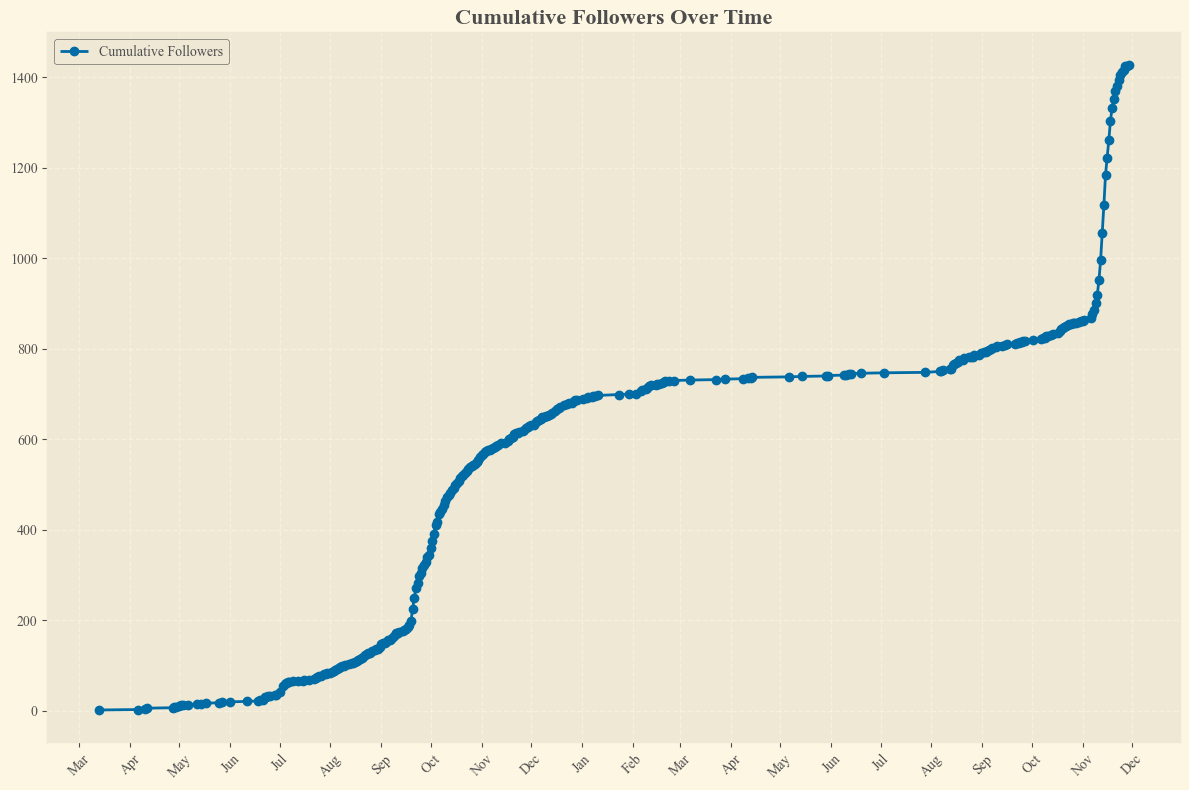
The main reason for the spike mid-November? I got added to the *women* in political economy starter pack (starter packs are a great feature of Bluesky btw, do check them out!).
But who are these new followers? How do they describe themselves in their bio? A Wordcloud based on their profile descriptions might help.
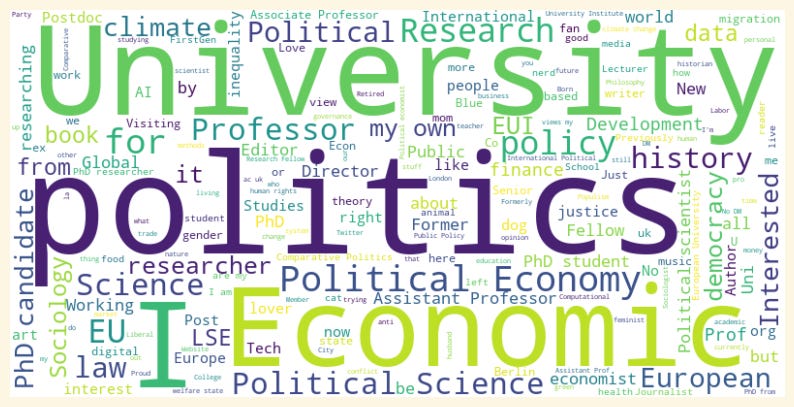
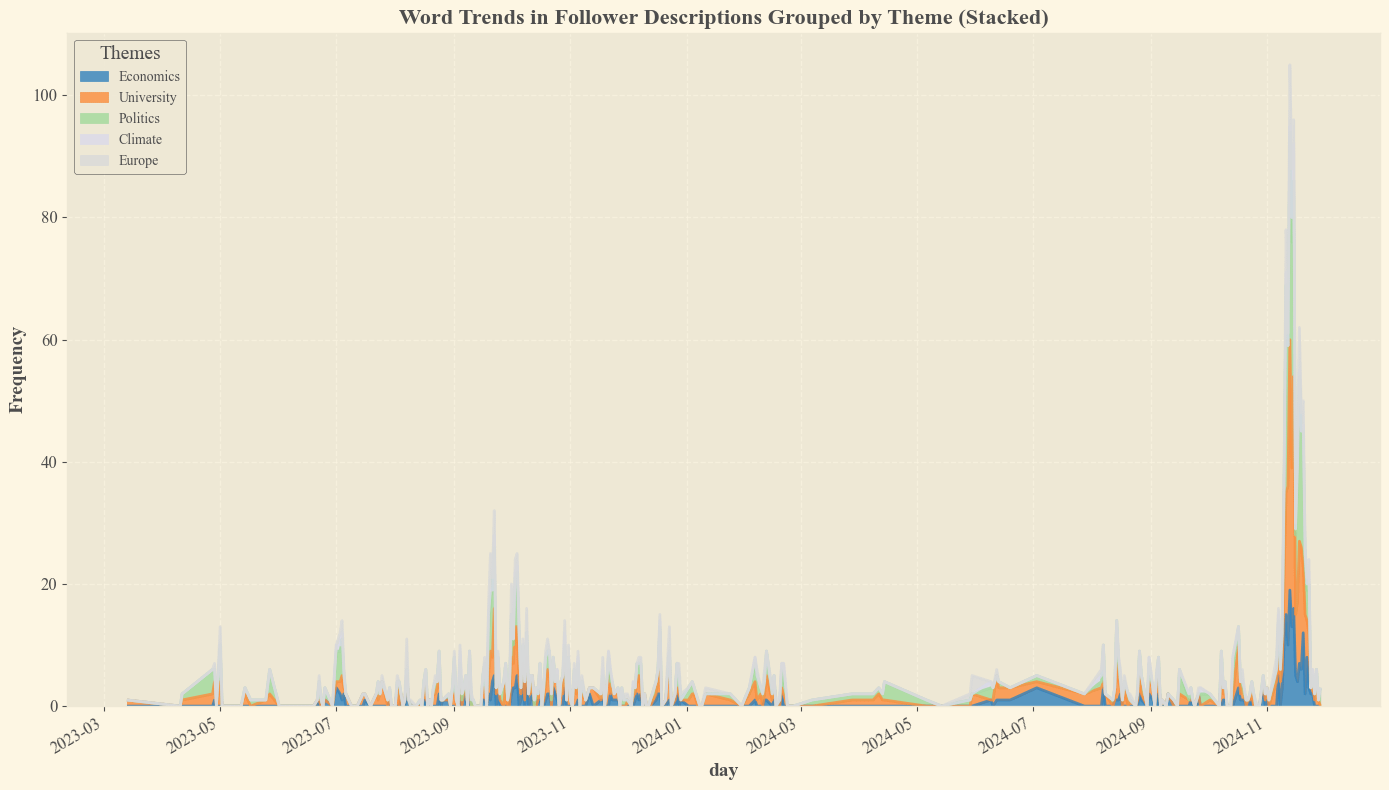
My followers seem to be the usual suspects: mainly political scientists and political economy researchers attached to universities. I decided to continue exploring and analyse the key themes in the descriptions over time.
Where did these followers come from? Are they new accounts or existing ones?
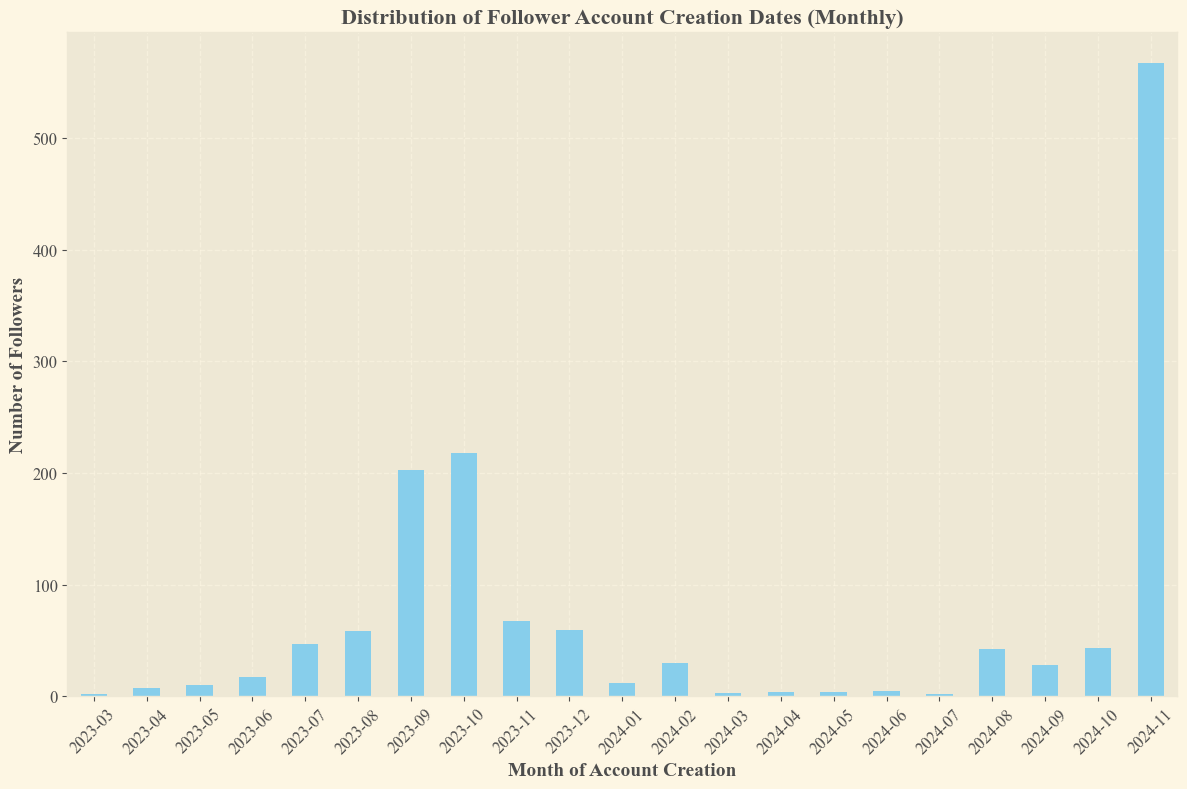
Mainly newbies it seems. Now let’s dig even further. Given that the starter pack to which I was added is a *women* in political economy starter pack, how about the gender distribution?
Not surprisingly, my follower base is overwhelmingly male (2/3rds)! Let me go a step further since my followers seem to be mainly academics: perhaps there are just more male academics on Bluesky? Did this skew in gender of followers change after the starter pack?
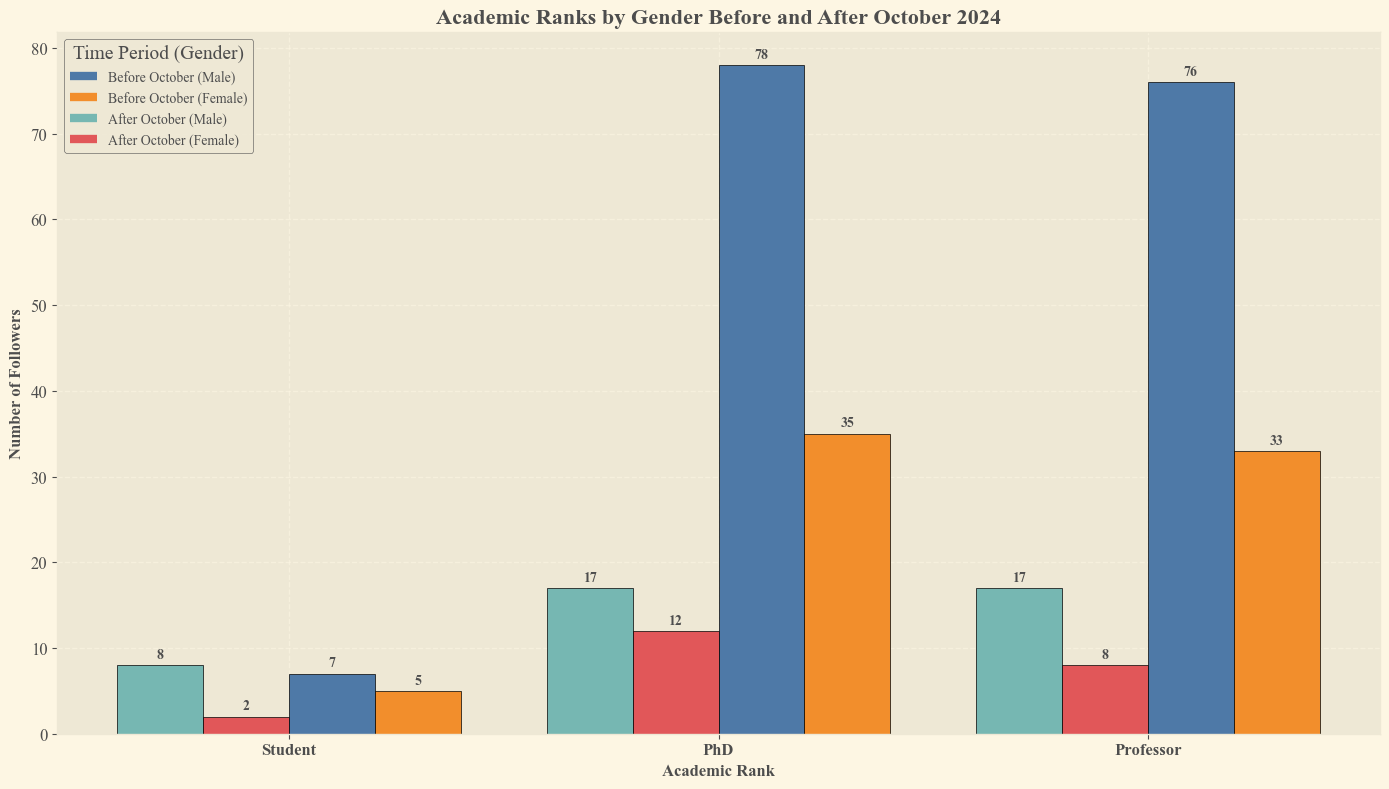
With the exception of students, it seems that my new followers are *slightly* more equally distributed across genders. That’s good news. Starter packs promoting women might work getting more women involved:) (Let’s not hope it is instead driven by men being less likely to follow women when made aware of women in the field!).
So far, I’ve just showed a few data points I could quickly explore. But there is more good news. Unlike Twitter/X, anybody can easily access this data through their well documented APIs. Better data and some interactive visualisations are on their way too. (For the code of my blog: check my Github ).